Can You Hear Me?
Spotting Glue Ear Early
Glue ear affects 8 in 10 children before the age of 10. Yet it often goes unnoticed in schools and at home.
Early awareness can transform a child’s learning, confidence, and future.
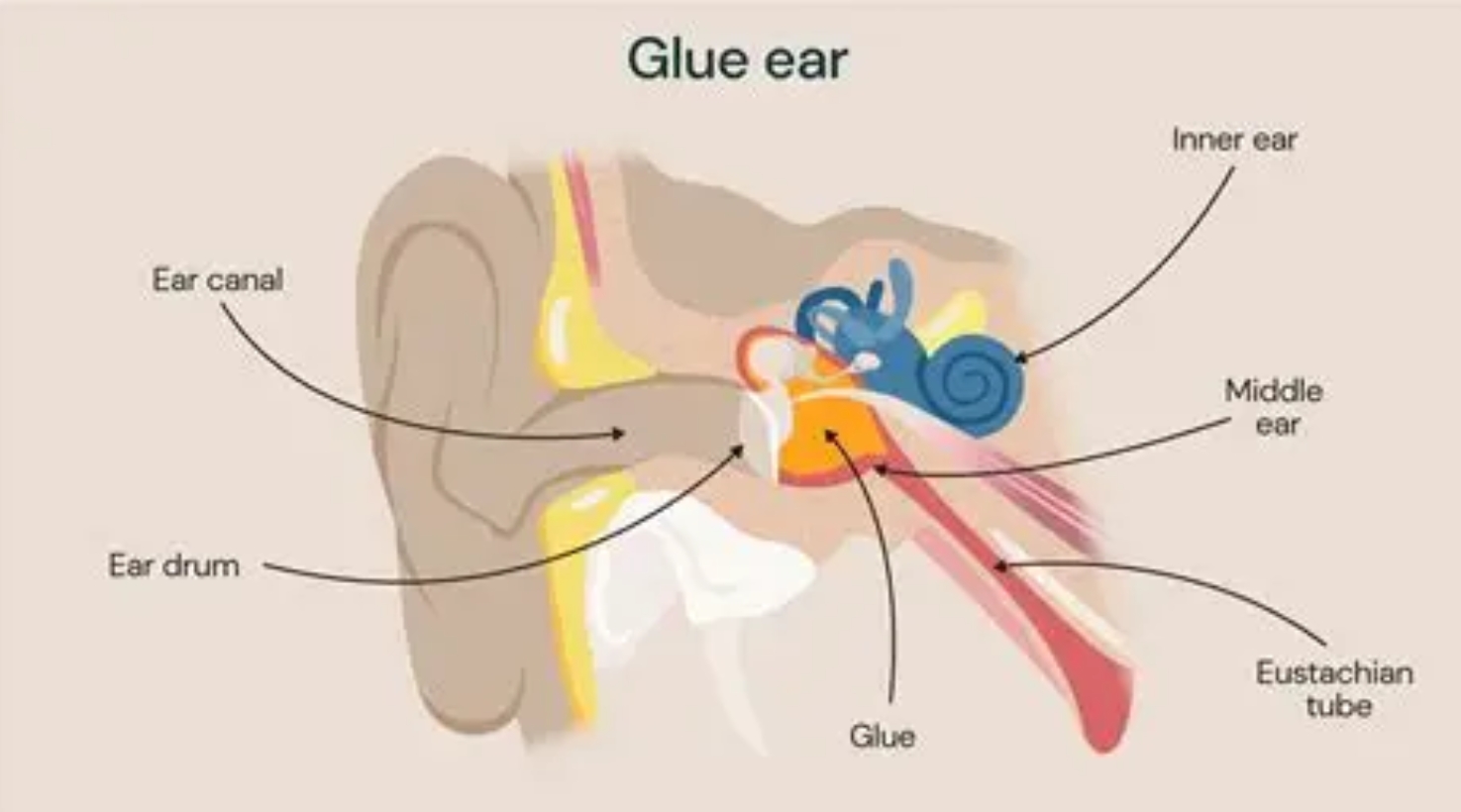
A Common Condition.
A Hidden Barrier.
Glue ear is the most common childhood condition after asthma.
Despite this, it’s rarely explained to parents, not covered in teacher training, and often mistaken for learning or behaviour problems.
Children with untreated glue ear may:
* Struggle academically, despite having no learning delay.
* Be labelled disruptive, inattentive, or SEN.
* Miss out on their true potential simply because they cannot hear.
It doesn’t have to be this way.
Could it be Glue Ear?
We’ve created simple, practical checklists to help spot the signs early from every perspective.
Parent Checklist
Behaviours at home that could suggest hearing loss.
Teacher Checklist
Classroom indicators that may be misread as SEN or behaviour issues.
Child Checklist
Easy questions for children to describe how the world sounds to them.
Evidence-Based Fact Sheets

We’ve partnered with Hear Glue Ear to provide free downloadable fact sheets for parents, teachers, and children.
These resources are evidence-based, practical, and designed to make life easier for families and schools.
Discover more about Hear Glue Ear, an innovative device designed to support children with Glue Ear who experience temporary hearing loss.
In this BBC interview, Dr. Tamsin Holland Brown, the creator of Hear Glue Ear, explains how the device helps improve hearing, boost confidence, and reduce the risk of children falling behind in school or facing speech and language challenges.
Watch now to learn how Hear Glue Ear is making a real difference for children and families.
Before We Label a Child, Let’s Ask:
Can You Hear Me?
Together we can stop children being mislabelled, overlooked, or left behind.
With the right awareness, the right tools, and the right questions, glue ear doesn’t have to hold any child back.

Be Part of the Solution
We’re building momentum to make sure every child is heard literally. By joining the haPPIE™ Research Group, you’ll: Get updates on our campaign and progress with MPs. Share your experiences to help shape real solutions. Be part of a movement that could save millions in SEN funding and change children’s lives.

Innovation
Fresh, creative solutions.

Integrity
Honesty and transparency.

Excellence
Top-notch services.
FOLLOW US


COMPANY
CUSTOMER CARE
LEGAL
Copyright 2026. GemNest. All Rights Reserved.